

By Alex Rodea December 03, 2025
Late night, after the shop was closed, I was doing a routine content check—SEO stats, rankings, the usual maintenance that keeps the site afloat. I searched “iron age stone guitar picks” to see where old archives were landing.
Search surfaced another name alongside ours: Stone Age Guitar Picks—similar era framing, similar “stone pick” shelf. In a niche this small, that kind of overlap can blur brand lines in search and in people’s heads.
To be clear: Iron Age is not affiliated with Stone Age Guitar Picks.
We're not writing a legal brief. This isn’t a personal beef. And it isn’t an invitation for anyone to dogpile. I’ve been frustrated by this overlap for years. This is the one time I’m putting it in writing—with the record attached—so I can stop carrying it.
Here’s the public timeline, what the overlap looks like, and how to tell the brands apart so the work stays under the right name.

In a niche this small, the cleanest way to cut through the noise is a timeline. Not opinions. Not screenshots. Just: what can be verified in the public record, and when it shows up.
This is based on what we could confirm publicly as of December 2025. If there’s earlier documentation we missed, we’re open to it.
Iron Age — Public Trail
Operating by late 2014 (Facebook Page Transparency begins Dec 8, 2014).
Domain claimed Dec 17, 2014.
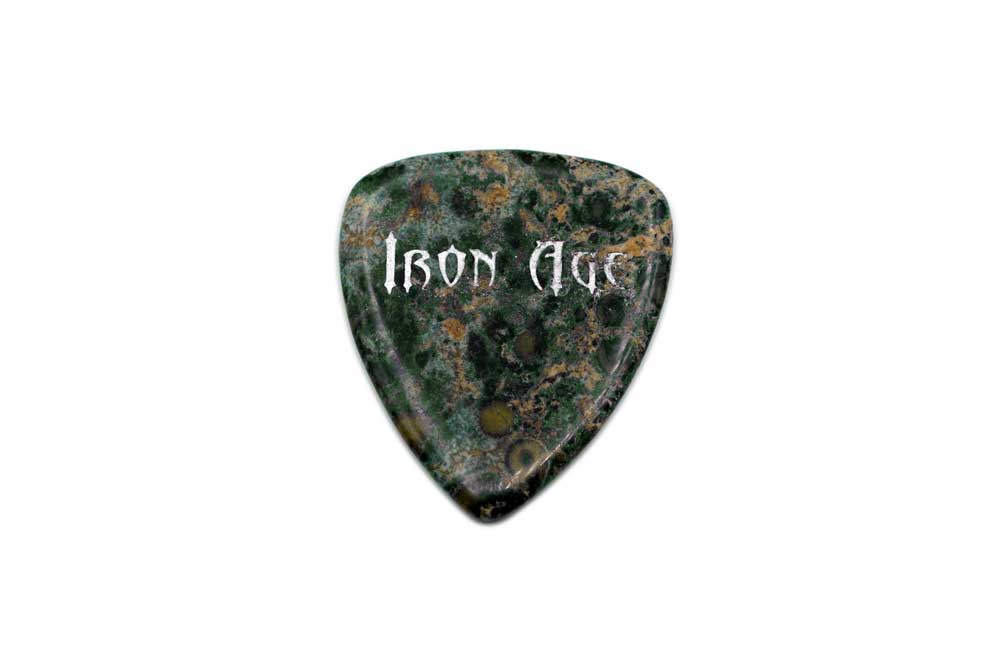
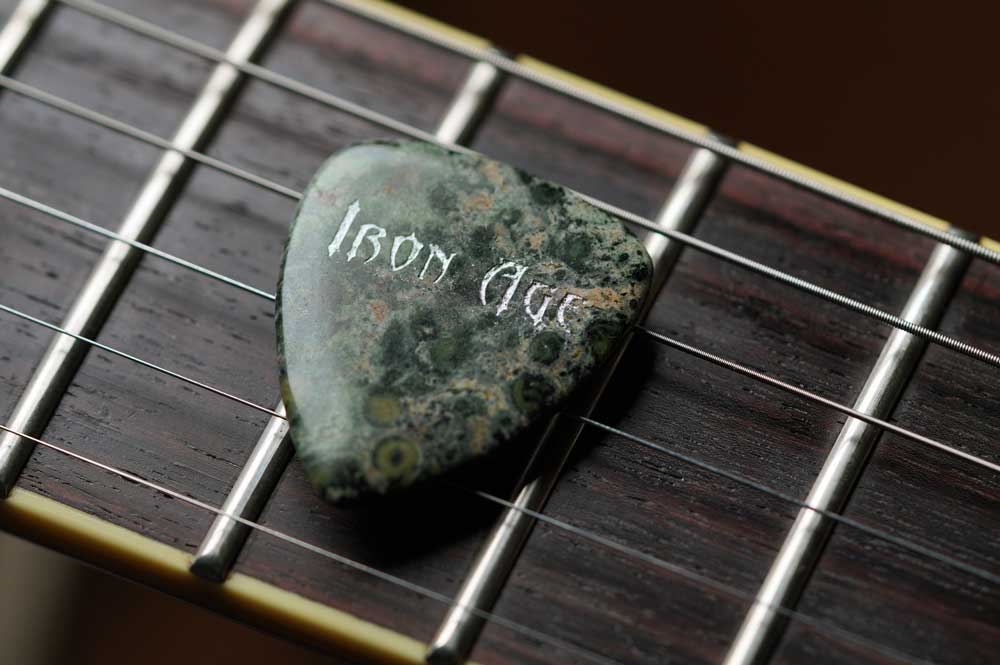
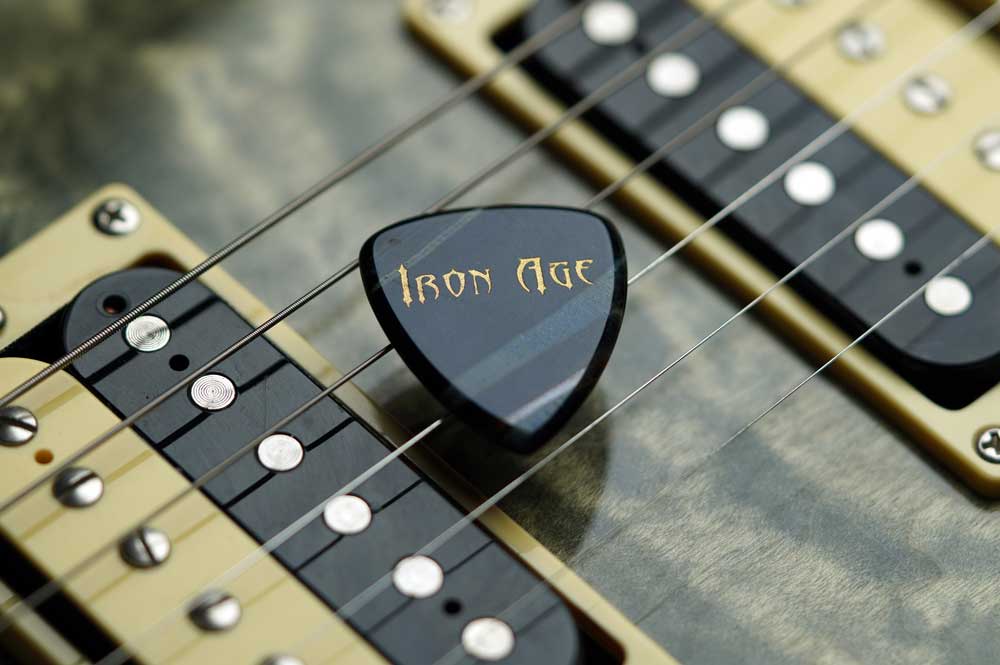
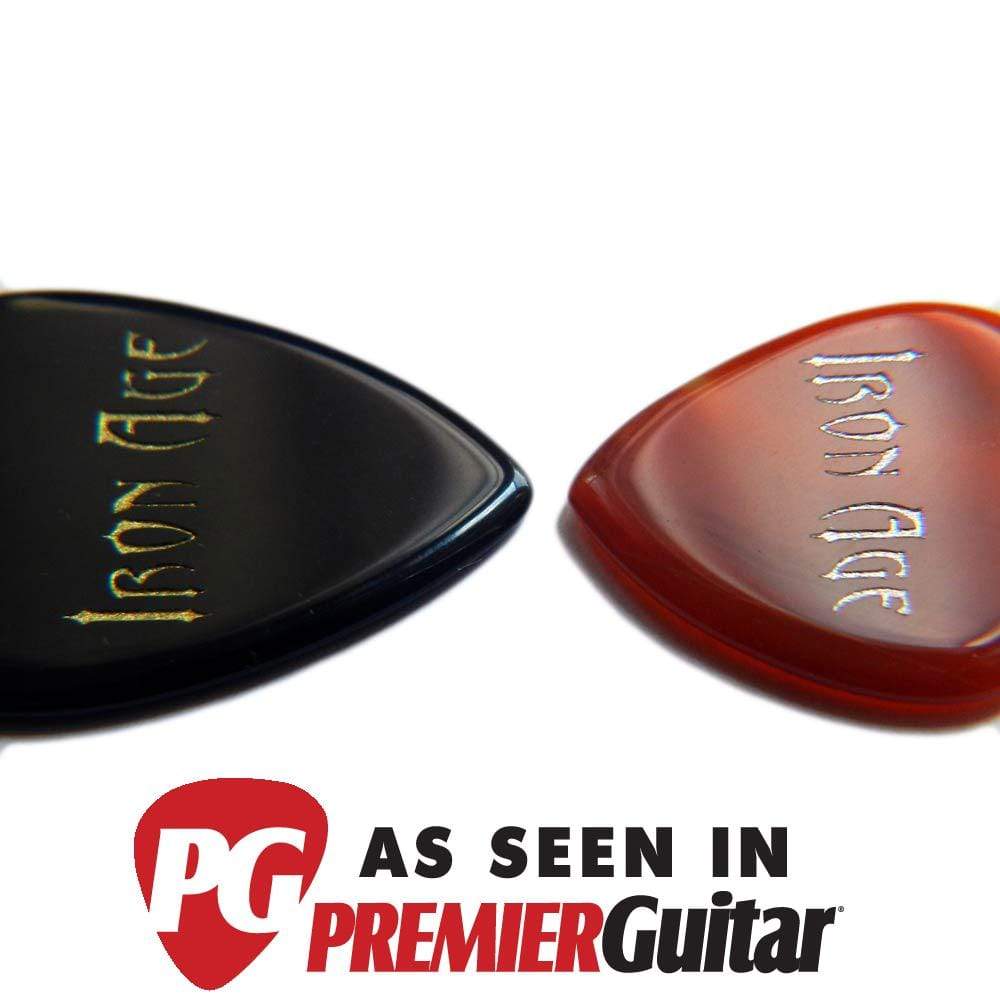
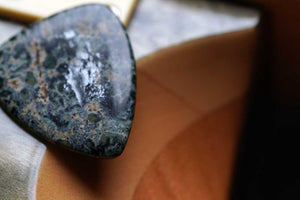
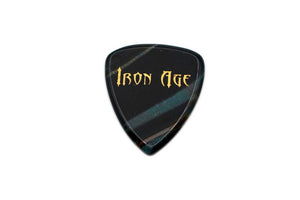
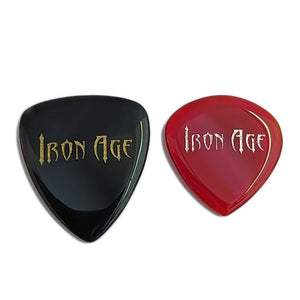
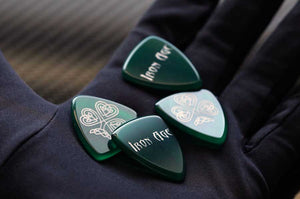
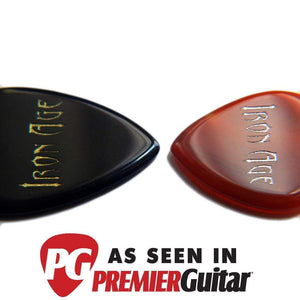
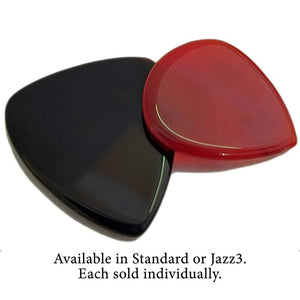
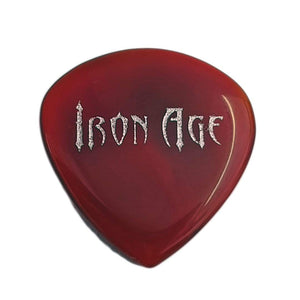
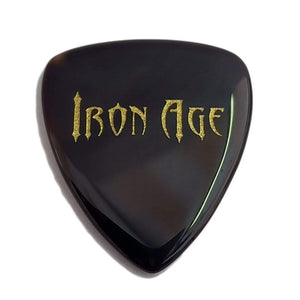
By Aug 12, 2016, stone/agate picks were public enough to be written up and syndicated by Premier Guitar—not as a side experiment, but as a visible product lane: ancient-era framing + stone material + premium positioning.
That matters for a simple reason: it explains why people mentally associated “Age”-framed branding with stone picks in the first place. The association didn’t appear out of nowhere—it formed early.

Stone Age — Public Indicators We Could Find
Facebook presence appears Aug 17, 2017.
Domain claimed Oct 25, 2019.
Earliest Internet Archive snapshot we could locate: Aug 3, 2020.
The Wayback Machine isn’t a birth certificate, but it’s a paper trail—one of the clearer ways to show when a brand’s website and messaging become publicly visible.
We’re not speculating on intent. The point is the effect search creates: in a niche this small, close framing + similar shelf terms can cause search confusion years later—especially when old posts and mentions keep resurfacing.
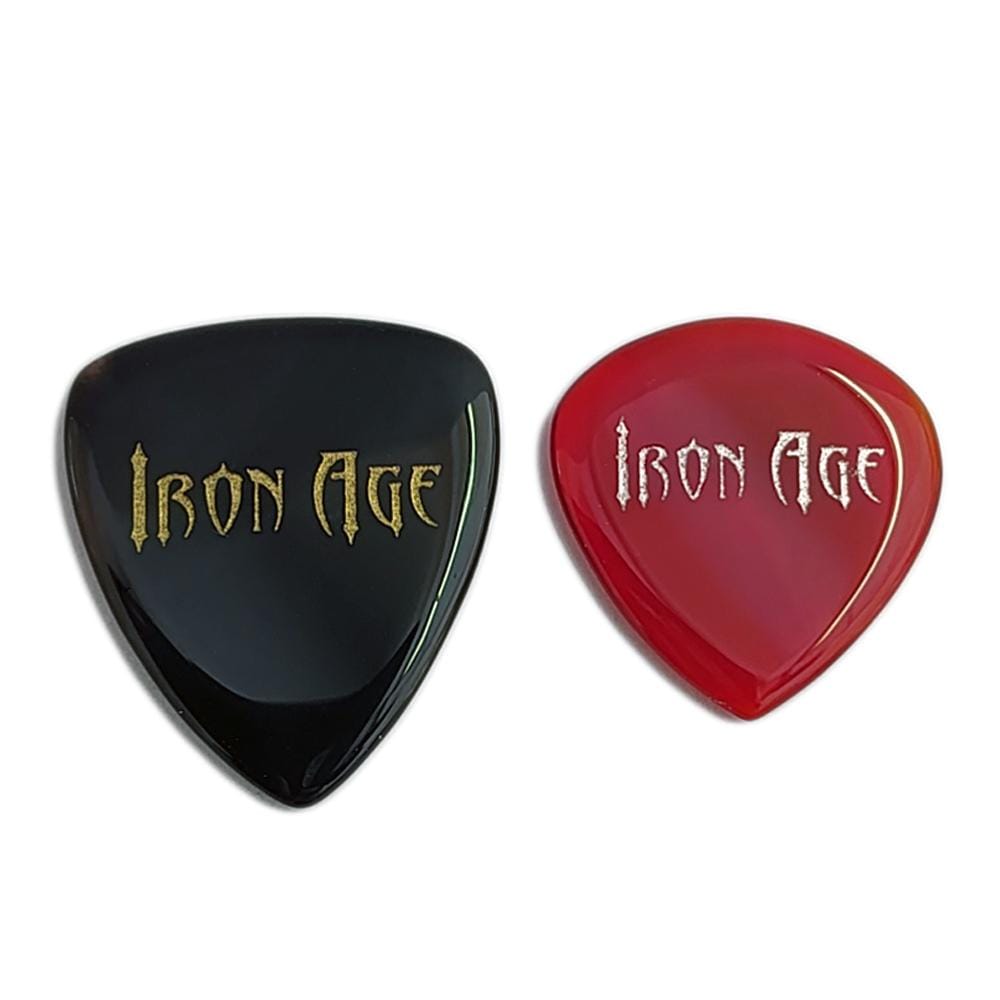
Adjacency is simple: brands get bundled not only in search results, but in people’s minds. Two names land close enough on the same shelf that the brain starts treating them like a set—same era framing, same “stone pick” lane, same kind of premium object story—right down to a red/white/black palette that reads familiar at a glance.
In a niche this small, that bundling doesn’t require a conspiracy. It only requires proximity. Close enough that people assume an association or take up the same headspace. Different enough that it can read as coincidence.
The “___ Age” naming is a good example of how this happens. “Iron Age” sets a frame: old world, forged intent, material culture. In the mental timeline people already carry, ‘Stone Age’ sits right next to ‘Iron Age.’ When the product category is also stone picks, the overlap becomes sticky. Most buyers aren’t doing research—they’re scanning, pattern-matching, and moving on.
Then you get the category’s shelf-language. Stone becomes more than a material—it becomes a morality play: tone from the stone, premium mystique, and the little ritual objects (the holder, the keychain wallet) that exist because an expensive pick can’t live like a disposable one. Nobody owns that framing. But it’s recognizable. And when multiple brands speak it at the same time, the separation gets thin fast: “this isn’t a consumable, it’s a talisman.”
And ambiguity is the whole problem. Not “who’s right.” Not a feud. It’s search bundling and mental shortcuts.
One specific place the overlap gets worse is collab optics and recognizable marks.
The Modern Guitarist “MG” runs are a clean example of what I mean. MG is a niche Facebook group. We did a PVRP MG-branded run—first one ever. Later, a purple agate MG-marked run shows up under the other name.
Maybe it’s “just a coincidence.” Maybe it’s “inspiration.” Either way, I can point out the observable: when the same cues keep stacking—name, era, mystique language, accessory logic, collab optics—it stops reading like parallel evolution and the pattern becomes hard to ignore.
I can’t prove intent, and I’m not making a legal claim. But accumulated overlap still creates borrowed association. In a small craft niche, makers have a duty to avoid building identity out of another maker’s headspace.
The effect nudges casual buyers toward the same assumption set. Even if each choice can be explained on its own, the stack produces the same result: borrowed gravity and people assuming continuity where none exists.
If search brought you here because these names show up together, here’s the fast check.
Affiliation: Iron Age is not affiliated with Stone Age Guitar Picks.
Official Catalog: our current pick catalog lives here: Iron Age Guitar Picks
Standards: the framework behind the work: The Oath
Current Direction: since June 2023, we’re no longer a “full stone picks only” shop—current releases include stone hybrids, experiments, and other materials, still inside our original mythic frame.

That’s the point of this section: in a niche this small, similarity doesn’t stay neatly separated. It collapses into association. This post exists to make the distinction explicit, so the work doesn’t get mistaken for something it isn’t.
Hype comes in bursts. You feel it in the inbox. You feel the likes, follows, and dopamine hit your brain. Then it fades. What’s left is what you built when nobody was watching.
And in that same late-night search—“iron age stone guitar picks”—there was another interesting find besides a competing brand name. A public thread. Two snapshots. Not “evidence” of a crime. Just a window into the posture of that era: shade as framing, and gatekeeping as culture. We’ll come back to those in a minute. Not to litigate it—just to show what the search layer keeps dragging back up.
The real separator in this niche isn’t a logo over a material. It’s identity with teeth. A system. Language. Boundaries. Process. The kind of thing you can point to years later and say: this is who we build for, this is what we refuse to be, and this is the line we won’t cross. That’s why the Codex exists. That’s why we wrote The Oath. Not to cosplay meaning. To keep the work coherent when the doom scrolling gets exhausting.
Stone materials taught us a lot. They also boxed us in. Fragile. Slow to iterate. Easy to romanticize, hard to execute efficiently. By June 2023, we stopped making full agate/stone picks. Not because stone is “bad.” Because it stopped serving the next chapter. We kept moving anyway—hybrids, experiments, and things like the Medusa Picks.
Time audits everything. When a brand is mostly flashy feed and persona, it needs constant motion to feel real. When the hamster wheel slows, the signal thins. The shop window starts looking more like an archive than a workshop.
And the two screenshots—“Iron Age? did Stone Age evolve?” followed by a comment from Stone Age’s owner (“This is like de-evolution… No affiliation between them… I wouldn’t rep ROS anyway 😂”)—plus the “poser” meme culture, age into what search preserves: noise that outlives the work.

This is the record. In a niche this small, brand bleed isn’t subtle. Names matter. Timelines matter. Outputs matter. And when the same shelf-cues keep showing up side by side, search results can blur the edges—then the blur carries over into people’s assumptions.
We’re not asking anyone to harass anybody. We’re not trying to “win the internet.” We’re doing maintenance—putting daylight between the names so the work doesn’t get swallowed by static and secondhand framing.
If you’re a buyer, judge makers the way you judge anything you’ll actually trust: consistency over time, coherent choices, and values you can see in the work. Do they explain what they do and don’t do? Do the reviews match the claims? Does the catalog evolve? And when the feed slows down, is there still a shop, a process, and a point of view—or just lingering aura?
If you’re a maker, fine—borrow techniques. Learn from everyone. But don’t build your identity out of proximity. Don’t rely on ambiguity. Don’t build in someone else’s wake. Build a lane that stands on its own even when nobody’s watching.
Finally, if you’re hunting for stone picks and you want a maker with a clear, independent lane, as well as proven track record (Est. 2008), Stoneworks Picks is worth a look.

by Alex Rodea July 02, 2026
A red-orange resin sheet sat in the shop for years before it finally became the limited Sol Invictus guitar picks. This Craft & Creation entry follows the process from CNC planing and engraving to hand finishing, wax, and the final satin glow.
by Alex Rodea June 25, 2026
Oisín is more than a figure from Irish myth. As the last warrior-poet of a vanished heroic age, he stands between worlds: youth and age, myth and history, beauty and loss...
by Alex Rodea February 18, 2026
Trying to pick the right guitar killswitch without overthinking it? In 60 seconds, I’ll walk you through momentary vs latching, drill vs drop-in, and LED options so you can choose the right Iron Age switch and get back to playing...
by Alex Rodea February 02, 2026
Rehearsal is the arena before the arena: a room, a count-in, and the moment where your right hand has to hold steady. Gladiator is a 3mm Ultem roster built to stay put, stay sharp, and earn meaning through use—one round at a time.
by Alex Rodea January 13, 2026
Empyrean MMXXVI started as a long-shelved slab of “stormed” resin and a simple idea: carve a crown out of the heavens and make it playable. This is the build log of what happened when that crown cracked—and how forty-eight picks were rebuilt to finally hold...
by Alex Rodea January 02, 2026
This is a running log of buyer-visible spec changes for Iron Age gear from January–June 2026. Picks, knobs, killswitches, and policies are listed by date with a short note on what changed, why, and what you might notice in use...
The Sword & Laurel — what our mark demands of the maker, and the musician.
The Oath — how we make, what’s in-house vs partnered, and what we stand behind.
This section doesn’t currently include any content.
Be first to know when new picks drop. Blog updates & shop news, no noise.15% off for new subscribers.
Gladiator · Imperial · Legio Ferrata · Parthenon · Ragnarok · Limited Edition · All Picks
As an Amazon Associate, Iron Age earns from qualifying purchases.
"Quality is never an accident.
Only High Intention. Sincere Effort. Skillful Execution.
Built on purpose, held on purpose."
— The Iron Age Standard
Sign up for the Iron Age newsletter to Save 15% on your 1st order, plus get exclusive offers, product updates, and early access to giveaways!
© 2026 Iron Age Guitar Accessories.
Est 2015.
Alex Rodea
Author
Alex is a former U.S. Marine avionics technician turned founder of Iron Age Guitar Accessories, a one-man shop building boutique picks, knobs, and kill-switches since 2015. He applies systems thinking, precision machining, and insights from thousands of shipped orders and customer reviews to write practical guides on tone, materials, and design for serious players.